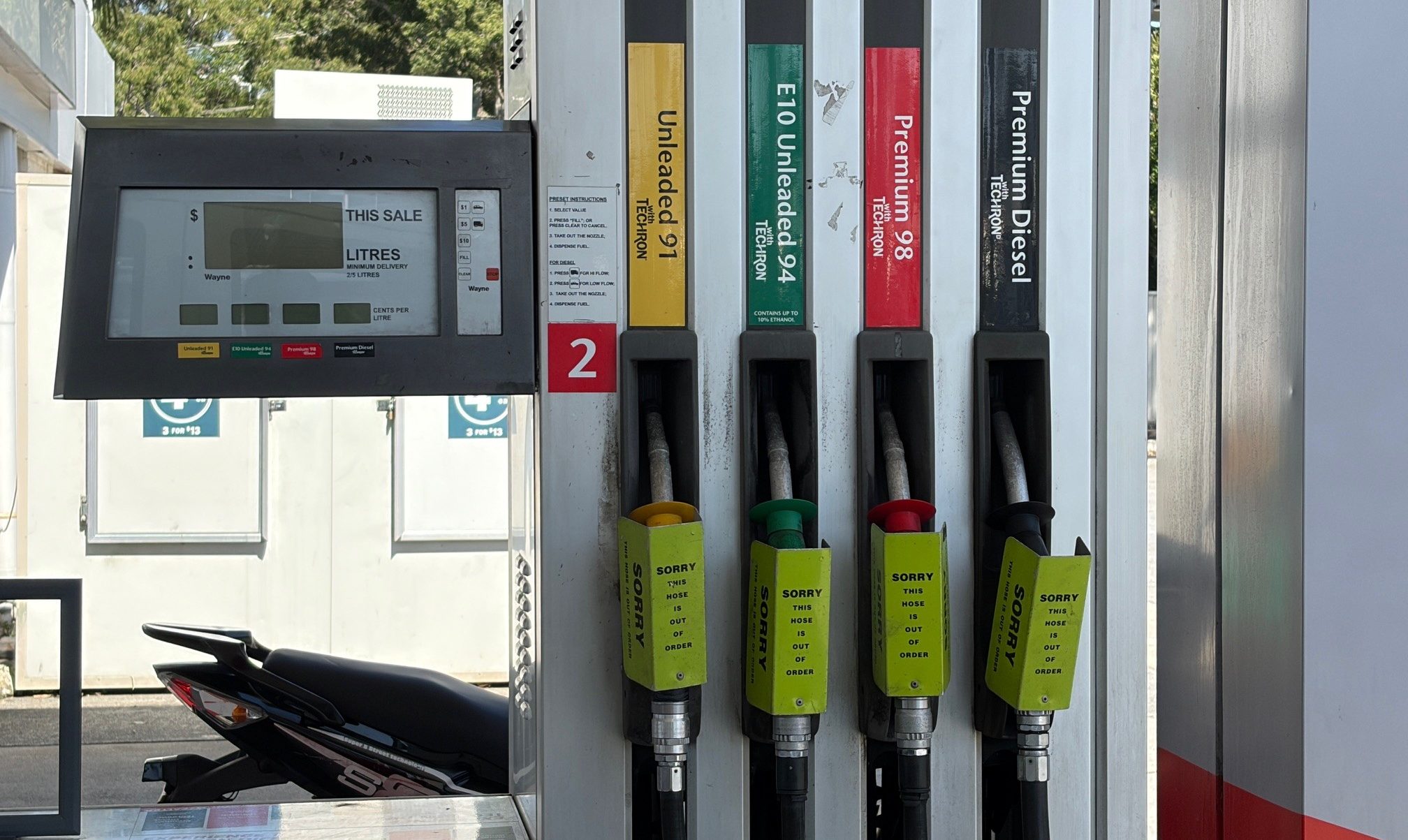
Dirty Fuel How To Avoid Expensive Problems
Australia’s Dirty Fuel Problem (2026): What It Means for Your Engine
Most people don’t think much about the quality of their fuel. You pull up, fill up, and drive away.
But right now in Australia, there’s a growing issue that could be costing you more than you realise.
Fuel quality has been temporarily reduced due to supply pressures.
And over time, that can affect your engine, your fuel economy, and your repair costs.
Cost-effective protection
Help protect your vehicle from dirty fuel for less than $5 per tank
By combining FTC Decarbonizer and Cleanpower Fuel Treatment, you can support cleaner combustion, reduce deposit build-up and maintain smoother engine performance at a very low cost per tank. Using good quality additives will address potential high sulphur problems.
Protect Your Vehicle from Dirty Fuel
Help protect your vehicle from dirty fuel for less than $5 per tank.
Maintain performance, reduce deposits and improve efficiency with Highly concentrated additives. These high treat rate additives provide the user with multiple doses to protect your vehicle for the months ahead.
See Additives for Dirty Diesel See Additives for Dirty Unleaded
What Do We Mean by “Dirty Fuel”?
“Dirty fuel” doesn’t mean fuel with dirt in it. It means fuel that has higher sulphur levels, fewer cleaning additives, and can leave more deposits inside your engine over time.
What happens if your local service station runs out of fuel, leaving only sludge, water, and debris at the bottom of its storage tanks? When the tanks are refilled, all of this contamination can become suspended in the fresh fuel. The result is that these impurities may end up in your vehicle, potentially leading to performance issues and damage to critical fuel system components.
Higher Sulphur
Increased sulphur levels can lead to more deposits and greater stress on emissions systems.
Fewer Cleaning Additives
Lower detergent levels can increase the risk of injector fouling and poor combustion.
More Deposits
Over time, this can lead to carbon build-up, reduced efficiency and performance loss.
Australia had improved fuel quality to world standards — but in 2026, higher sulphur fuel has been temporarily allowed back in due to supply issues.
While this helps maintain fuel availability, it also means engines may now be exposed to fuel that burns less cleanly and can create more deposits over time.
Current vs Temporary Fuel Comparison
| Factor | Current Fuel | Temporary Fuel | Impact on Engine | Additives to avoid problems |
|---|---|---|---|---|
| Sulphur Content Fuel Quality |
Low sulphur petrol supporting cleaner combustion and lower emissions system stress. | Temporary unleaded may allow higher sulphur levels, up to 50 ppm. | More deposits, increased contamination and greater long-term pressure on catalytic systems. | FTC Decarbonizer for cleaner combustion and reduce carbon deposits. |
| Octane Use Performance |
Many newer petrol engines perform best on 95 or 98 octane. | More frequent reliance on 91 octane fuel. | Power loss, flatter throttle response and greater knock tendency in premium-fuel engines. | FTC Decarbonizer to reduce carbon hot spots. |
| Combustion Efficiency Engine Smoothness |
Cleaner, more efficient and more predictable burn. | Less efficient combustion under lower-quality fuel conditions. | Higher fuel use, rougher running and reduced responsiveness. |
FTC Decarbonizer to improve combustion quality. Cleanpower supports better atomisation for a more complete burn. |
| Injector Cleanliness Fuel System |
Cleaner fuel systems with lower fouling risk. | Greater potential for injector deposits and poorer spray patterns. | Rough idle, hesitation and inconsistent combustion quality. | Cleanpower helps maintain injector cleanliness and consistent fuel delivery across variable fuel quality. |
| Carbon Build-Up Protection |
Slower carbon formation under cleaner fuel conditions. | Higher deposit formation over time. | Hot spots, efficiency loss, reduced performance and long-term contamination. | FTC helps reduce and remove carbon deposits to keep combustion areas cleaner for longer. |
| Driveability Real World |
Smoother running and performance closer to intended engine design. | Flatter response and less refined operation. | Sluggish acceleration and reduced real-world drivability. | Together, FTC and Cleanpower help support smoother combustion and more consistent engine response. |
| Emissions System Stress Long-Term Health |
Lower sulphur fuel is easier on catalytic converters and related systems. | Higher sulphur can increase contamination and stress over time. | Reduced long-term efficiency of emissions components. | Cleaner combustion helps reduce unnecessary contamination reaching downstream emissions components. |
How FTC Decarbonizer and other additives will help.
FTC Decarbonizer helps support cleaner combustion and reduce carbon build-up that can create hot spots and reduce efficiency. Cleanpower Fuel Treatment helps maintain injector cleanliness and improve atomisation for better fuel delivery.
Used together, they help your engine cope better with variable fuel quality by reducing deposits, supporting smoother performance and helping restore combustion efficiency.
Important: FTC Decarbonizer and Cleanpower do not increase octane or turn 91 into 95/98. Their role is to help reduce the side effects of lower-quality fuel by improving combustion quality, reducing deposits and supporting cleaner fuel system operation.
Protect Your Vehicle from Dirty Fuel
Help protect your vehicle from dirty fuel for less than $5 per tank.
Maintain performance, reduce deposits and improve efficiency with FTC Decarbonizer and Cleanpower.
See Additives for Dirty Diesel
See Additives for Diry Unleaded