Improved Fuel Efficiency government approved testing
Fuel economy improvements can be difficult to separate from normal changes in driving conditions, vehicle load and driving style. For that reason, Cost Effective Maintenance wanted to do more than rely on customer feedback.
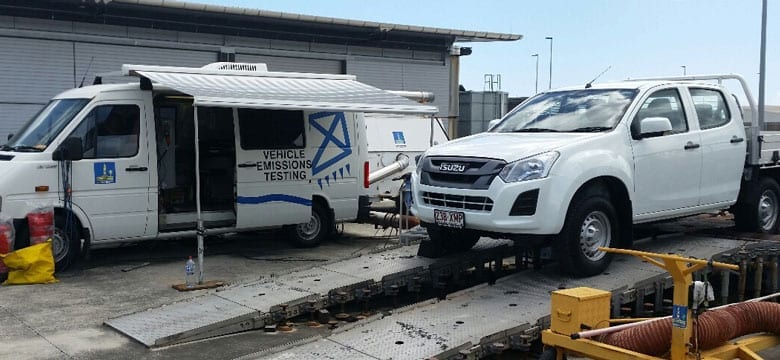
A brand-new 2017 Isuzu D-Max was taken to an independent emissions testing facility and tested on two separate occasions. The first test was completed with the vehicle in standard new-vehicle condition. The second test was completed after using Cost Effective Maintenance products.
The controlled testing recorded an overall fuel saving of 4.7%, with a 7.8% fuel saving during the cruise component of the test.
How the DT80 fuel-efficiency test works
After researching the testing options available and the accreditation of different facilities, Cost Effective Maintenance was referred to the Brisbane City Council emissions testing facility, which conducted the DT80 test procedure.
The DT80 test is designed to reflect realistic operating conditions. It includes load compensation to 50% of maximum payload, three periods of maximum acceleration to 80 km/h, an 80 km/h cruise component and accurate fuel-consumption measurement.
Using a repeatable test procedure allows the same vehicle to be compared under controlled conditions rather than relying on day-to-day road fuel-economy figures, which can vary because of traffic, weather, load, driving style and other factors.
What did the testing show?
The DT80 testing recorded improvements in fuel efficiency during both acceleration and cruise operation.
The strongest measured improvement occurred during the 80 km/h cruise section of the test, where fuel consumption improved by 7.8%.
Across the complete test procedure, the vehicle recorded an overall fuel saving of 4.7%.
| Test result | Recorded result |
| Cruise fuel saving | 7.8% |
| Overall fuel saving | 4.7% |
| Acceleration | Improved fuel efficiency recorded |
These figures relate specifically to the vehicle and test procedure used. Actual fuel savings in other vehicles can vary according to engine condition, vehicle load, operating conditions and driving style.
What products were used?
The treated Isuzu D-Max used the Diesel Performance Pack, which combines three Cost Effective Maintenance products: FTC Decarbonizer, CRD Fuel Enhancer and AW10 Antiwear.
FTC Decarbonizer is added to the fuel and works during combustion to help improve the combustion process while progressively reducing carbon and soot accumulation.
CRD Fuel Enhancer is designed to help clean injector and fuel-system deposits, support injector spray quality and provide additional lubricity and corrosion protection.
AW10 Antiwear is used in the engine oil to help reduce friction and wear within lubricated engine components.
Together, the three products address combustion, fuel-system cleanliness and mechanical friction.
Why test a brand-new vehicle?
One of the more interesting parts of this test is that the Isuzu D-Max was brand new.
It is easy to understand why cleaning deposits from an older diesel may improve the way it runs. A new vehicle, however, does not begin with years of injector deposits, combustion deposits or carbon build-up.
That makes the DT80 result particularly useful because it shows that measurable changes were recorded even in a new diesel vehicle under controlled test conditions.
The test recorded an overall 4.7% improvement in fuel consumption, including a 7.8% improvement during the cruise section.
What do the results mean?
The result demonstrates that fuel efficiency is influenced by more than simply removing years of accumulated deposits.
Combustion quality, injector performance, friction and fuel-system condition can all contribute to how efficiently an engine converts fuel into useful power.
In this test, using the complete treatment program produced measurable improvements under both acceleration and steady-speed operation.
That does not mean every vehicle will achieve exactly the same result. Older vehicles, heavily loaded vehicles, towing applications and equipment operating under different conditions may respond differently.
View the full DT80 test results
The full test report provides more detail about the vehicle, the testing procedure and the recorded fuel-consumption results.
For more information about fuel efficiency, injector cleanliness, carbon build-up or choosing the correct treatment for your diesel vehicle, contact Cost Effective Maintenance on (07) 3376 6188.