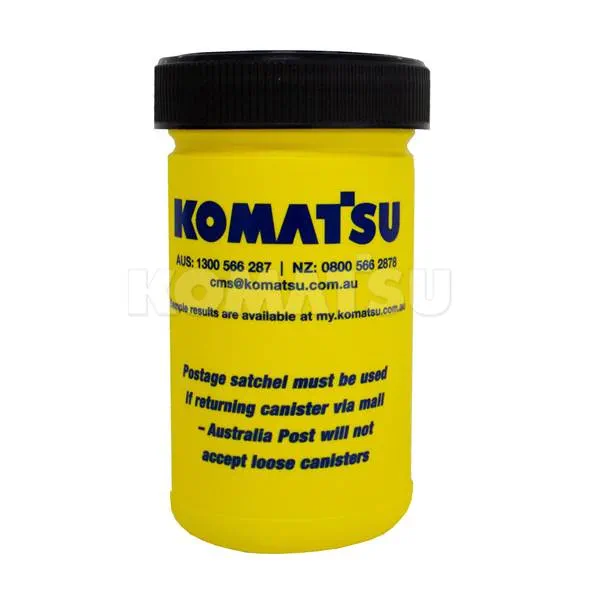
Komatsu Diesel Fuel Analysis Kit
Laboratory diesel fuel analysis in a post-back kit. The Komatsu KOWA Diesel Fuel Kit measures the presence of contaminants in your fuel — the fastest way to settle whether a fuel problem is the fuel or the machine.
- Tests bulk tank, day tank or in-machine fuel
- Pre-paid Australia Post satchel included
- Part No. KOWA-DIESELCM
$159.00 incl. GST
- Description
- instructions
Description
When a fleet starts blocking filters, losing power or throwing injector faults, the first question is always the same: is it the fuel? The Komatsu KOWA Diesel Fuel Analysis Kit (Part No. KOWA-DIESELCM) answers it with a laboratory result instead of a guess. Komatsu’s fuel analysis measures the presence of contaminants in the fuel.
When to test your diesel
- Filters blocking earlier than they should
- Fuel that has been stored in a bulk tank over a season
- A new fuel supplier, or a delivery you are not sure about
- Machines down with injector or fuel-system faults
- Routine monitoring of on-site bulk storage
What’s in the kit
- Outer jar
- Inner sample jar
- Sample card
- Plastic bag
- Sample tube
- Pre-paid Australia Post EParcel mailing satchel
Sampling and results
Draw the sample, complete the sample card and post the kit in the pre-paid satchel — Komatsu advises mailing immediately for quick results. Results are reported by Komatsu’s Condition Monitoring Services; register through the myKomatsu Condition Monitoring portal to receive your reports.
Once you know what is in the tank
A result is a starting point. Where water and microbial growth are the issue, PMX-145 fuel biocide is the treatment for bulk tanks, and where the fuel has left deposits in the injectors and common-rail system, CRD Fuel Enhancer is the clean-up. If you want a hand interpreting the report against your fuel storage setup, call us on (07) 3376 6188.
How to take a diesel fuel sample
- Sample where the problem lives. For a bulk tank, draw from the bottom or the tank drain — water and microbial growth sit at the fuel/water interface, not at the top.
- Keep the container sealed until the last moment. Airborne dust and workshop debris will read as contamination.
- Fill the sample card. Tank or machine ID, fuel grade, how long the fuel has been stored, and the fault you are chasing.
- Seal and bag. Cap the inner jar, place it in the plastic bag, then the outer jar.
- Post the same day in the pre-paid Australia Post satchel.
Testing a bulk tank before and after treatment gives you the proof the treatment worked.