
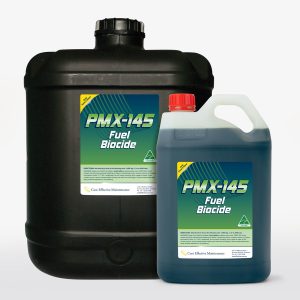
PMX-145 Fuel Biocide
From $339.00 incl. GST
PMX 145 is a non-hazardous fuel biocide that is designed to remain suspended in diesel fuel and biodiesel. Its primary purpose is to kill microbes. However, it also reduces sludge and prevents regrowth in the long term while maintaining ASTM D975 fuel compliance.
As it is an advanced diesel biocide, it works throughout the entire fuel system. Indeed, because it is soluble in both the water and fuel phases, it can be added directly to the fuel tank, bulk storage tanks, transported fuel, or even at service stations. This ensures full coverage across your equipment, vehicles, and marine applications.
Through this product, you can expect:
- Broad–spectrum activity across bacteria, fungi and microorganisms
- Rapid control of microbial growth and contamination
- Long-term fuel preservation and improved fuel quality
- Eradication of diesel bug, bacteria, algae, yeast and fungi in diesel engines
- The dropping of sludge and contamination to the tank bottom for easy drain-off
- It will remain suspended for full-tank treatment and system protection
- It will serve as a biostat to prevent future microbial growth and fuel degradation
- Description
- Independent Testing
- ASTM Testing
- Doseing Instruction
- How Does It Work
- MSDS / TDS Sheets / Prodcut Download
Description
What Is PMX 145 Fuel Biocide?
PMX 145 is a high-performance fuel biocide designed to eliminate and prevent microbial contamination. This is commonly known as the diesel bug in diesel and biodiesel systems. As a powerful diesel biocide, it works throughout the entire fuel system to protect fuel injectors, filters, and critical engine components.
Unlike many products that treat only one layer, PMX 145 is soluble in both the water and fuel phases. Hence, it remains suspended in the fuel tank to ensure complete system coverage. This makes it a highly effective biocide for diesel across storage, transport, and operational use.
It is also a non-hazardous fuel treatment that keeps fuel compliant and suitable for on-road diesel, marine use, and long-term storage.
The core benefits it provides are:
- Broad-spectrum microbial control
- Rapid killing of bacteria and fungi
- Long-term fuel preservation and reliability
Why Diesel Fuel Needs a Biocide
The diesel bug refers to microbial growth (including bacteria, fungi, yeast, and mould) that forms at the fuel–water interface inside a tank. This contamination feeds on fuel and moisture caused by condensation. It can lead to sludge, acids, and corrosion across fuel system components.
“Diesel algae” is a commonly used term, although no real algae exist in diesel. Instead, this bacterial growth produces a thick, dark mess that contaminates fuel and disrupts system performance.
Some common problems caused by diesel bug contamination include:
- Blocked fuel filters leading to reduced power and engine drop-off
- Damage to fuel injectors, pumps, and fuel lines
- Corrosion in tanks and storage systems
- Poor reliability in generators, marine engines, and site equipment
- Increased smoke, reduced performance, and costly repairs
PMX 145 is specifically formulated as a diesel bug treatment and diesel algae treatment. This helps to control contamination at the source and protect your fuel system long-term.
How PMX 145 Works in Diesel and Biodiesel
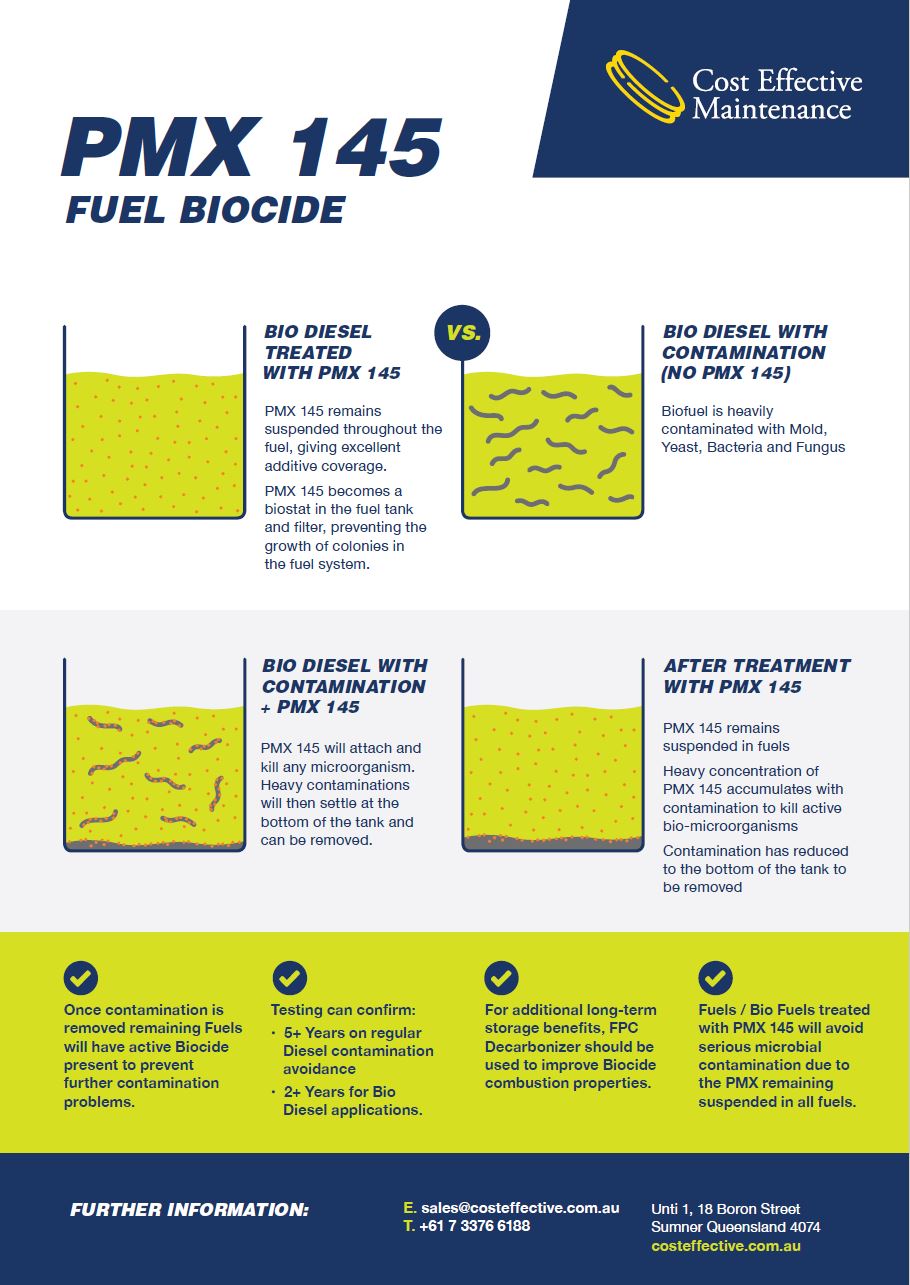
PMX 145 delivers a complete solution for microbial contamination through the following multi-stage treatment process:
Full-phase activity in fuel and water
PMX 145 is fully compatible with both fuel and water, which allows it to treat microbes wherever they occur. It remains suspended throughout the fuel system to ensure consistent coverage across the entire tank. This prevents any untreated zones.
Attaches to and kills microbes
Once added, the product activates and targets microorganisms, including bacteria and fungi. It binds to active colonies and, in doing so, eliminates the diesel bug. This stops contamination before it spreads.
Drops sludge and contamination for easy removal
As microbes die, waste material, sludge, and contamination settle at the bottom of the tank. Rather than pushing debris through the engine, this allows operators to drain the system and remove buildup efficiently.
Acts as a long-term biostat
After the initial treatment, the residual product continues to protect the fuel by preventing regrowth. This ensures long-term fuel quality and can extend storage life up to 5+ years in diesel and 2+ years in biodiesel under controlled conditions.
Where to Use PMX 145 – Diesel Bug Treatment for Storage, Marine and Fleets
PMX 145 is suitable for any application where fuel sits long enough for water contamination and microbial growth to occur.
Bulk fuel storage and depots
Treat large storage tanks and fuel reserves at terminals or on-site locations. This helps maintain clean fuel before it reaches vehicles or machinery.
Marine and boating applications
Marine fuel systems are particularly prone to diesel algae due to exposure to moisture. PMX 145 protects engines and prevents blockages that could lead to failures offshore.
Generators and standby power systems
Backup systems rely on clean fuel to operate when needed. Treating stored fuel ensures consistent engine start-up and performance under load.
Commercial fleets and site equipment
It is ideal for vehicles, transport systems, and machinery with low fuel turnover because it helps reduce contamination, improve fuel efficiency, and extend filter life.
PMX 145 can be added directly at multiple points, including terminals, storage facilities, or during fuel delivery. This makes it a flexible and efficient diesel bug treatment.
Safety and Handling for PMX 145 Fuel Biocide
PMX 145 is a non-hazardous fuel biocide when used according to instructions. However, standard handling precautions should always be followed when working with fuel additives.
Recommended safety measures include:
- Avoid direct skin contact
- Wear gloves, safety goggles, or face protection
- Follow site safety procedures when handling fuel or additives
- Ensure proper storage and controlled mixing conditions
Always refer to the product’s MSDS and technical data sheets for full handling instructions and compatibility details.
FAQs
Is PMX 145 a fuel biocide or just a fuel conditioner?
PMX 145 is both a true broad-spectrum diesel biocide and a conditioner. This means that, rather than simply improving fuel performance, it actively kills bacteria, fungi, and other microbial contaminants.
Can I use PMX 145 as a diesel algae treatment in marine fuel?
Yes, PMX 145 is suitable for marine use because it effectively treats the contamination commonly referred to as “diesel algae.” This helps to protect marine engines and fuel systems.
Will PMX 145 affect fuel quality or engine warranties?
No. PMX 145 maintains ASTM D975 compliance. Therefore, it does not negatively impact fuel quality, engine performance, or system compatibility when used as directed.
How long does one treatment of PMX 145 last in storage?
One treatment can last up to 5+ years in standard diesel and around 2+ years in biodiesel. However, this depends on how you store it and whether new water enters the system.
Do I still need to drain water if I use PMX 145?
Yes. PMX 145 helps separate water and drop contamination. But you will still need to drain the tank of water and sludge to achieve the best results.
Can I use PMX 145 with other diesel fuel additives?
PMX 145 is generally compatible with other fuel treatments and additives. It can be paired with complementary products to improve combustion and long-term storage performance.
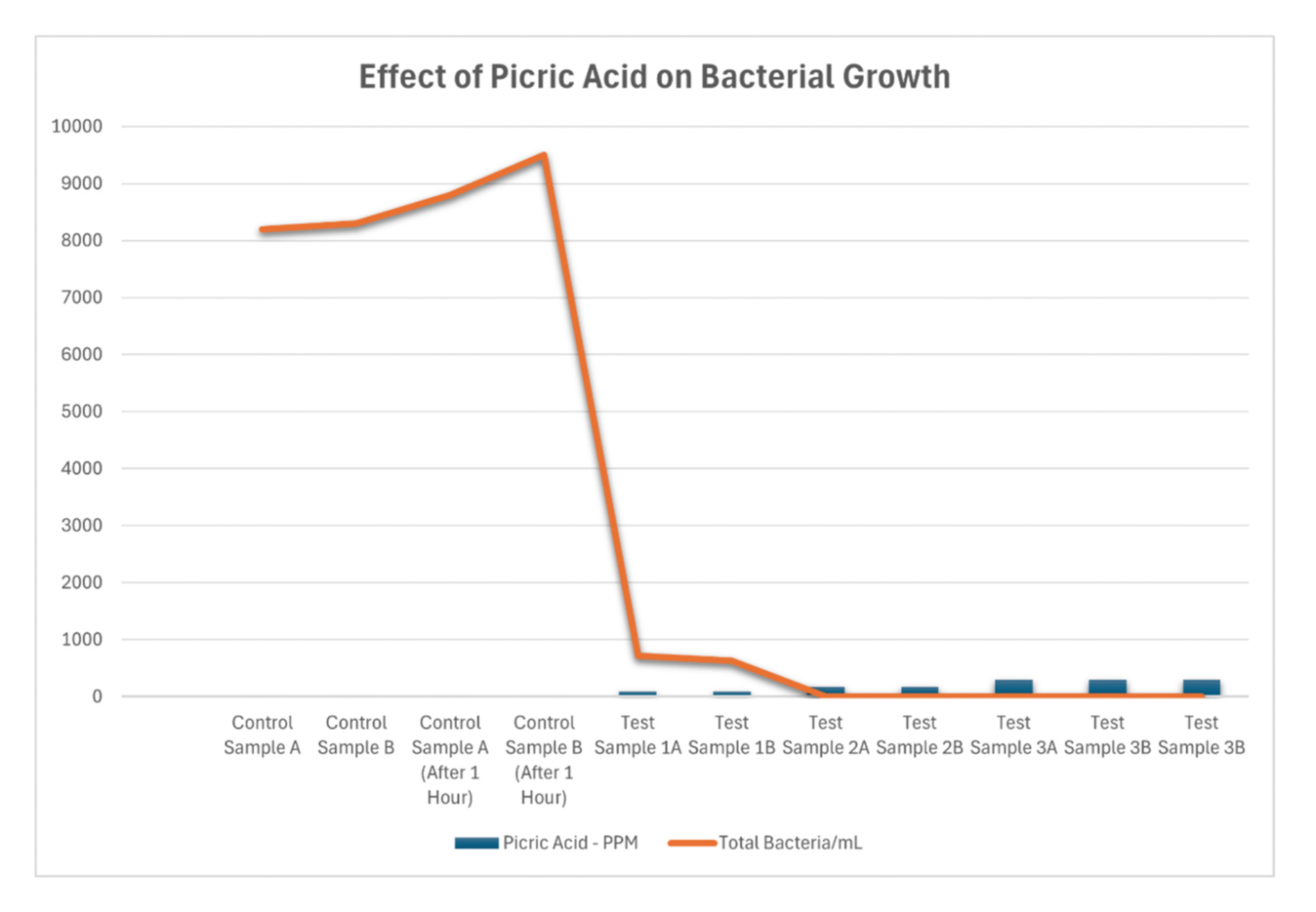
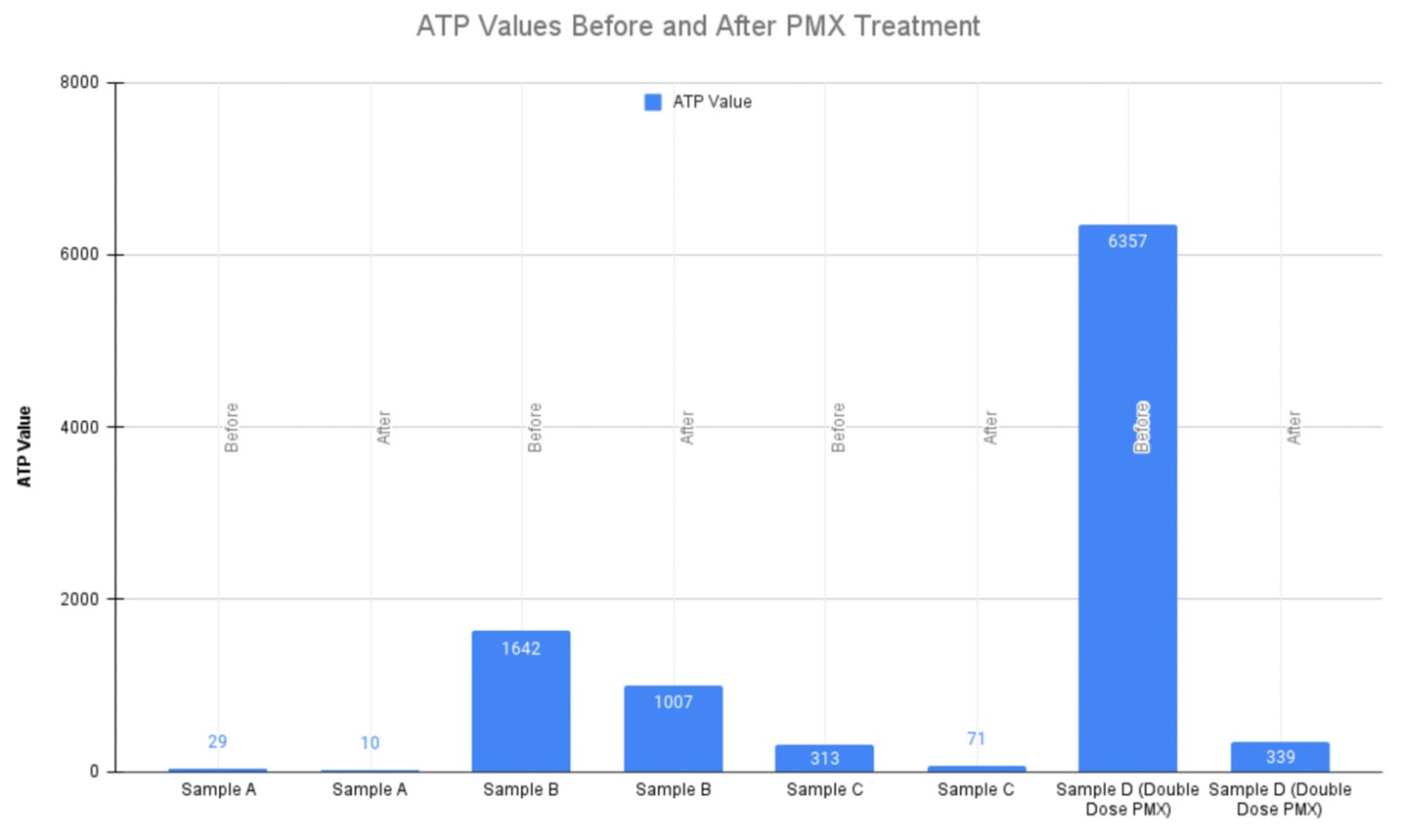
PMX145 – Independently Tested & Verified for Diesel & ULP Fuel
PMX145 has been independently verified to meet and exceed international ASTM D975 (diesel) and ASTM D4814 (ULP/unleaded petrol) standards. This ensures no reduction in fuel stability across both fuel types, with verified compliance with Australian and global fuel quality benchmarks.
ASTM Results – PMX Treated Diesel Fuel (Independent Laboratory Verification)
| ASTM / PMX Standard | Parameter | Result | Specification / Limit | Status |
|---|---|---|---|---|
| ASTM D975 | Diesel Fuel Specification Compliance | Meets All Requirements | Standard Diesel Fuel Specification | ✅ PASS |
| ASTM D5185 | Elemental Metals (Cu, Fe, V, Al, Si, Na, K, Mn, Ca, Mg, P, Zn) | <1 ppm | <2 ppm | ✅ PASS |
| ASTM D86 | Distillation (T10–T95) | 215–323 °C | 200–360 °C | ✅ PASS |
| ASTM D4052 | Density @15 °C | 846.9 kg/m³ | 820–860 kg/m³ | ✅ PASS |
| ASTM D93 | Flash Point | 64 °C | >61 °C | ✅ PASS |
| ASTM D445 | Kinematic Viscosity @40 °C | 2.5 cSt | 1.9–4.1 cSt | ✅ PASS |
| ASTM D5453 | Sulfur Content | 0.0007 % | <0.05 % | ✅ PASS |
| ASTM D2500 | Cloud Point | –3 °C | Within spec | ✅ PASS |
| ASTM D6079 | Lubricity (HFRR) | 0.406 mm | <0.520 mm | ✅ PASS |
| ASTM D2709 | Water & Sediment | <100 ppm | <200 ppm | ✅ PASS |
| ASTM D6469 | Microbial Contamination | <10 CFU/mL | <200 CFU/mL | ✅ PASS |
| ASTM D4176 | Visual Appearance | Bright & Clear | No haze / particulates | ✅ PASS |
| ASTM D1500 | Colour / Appearance | L1.0 – Light Amber | Clear to Amber | ✅ PASS |
| ASTM D613 / D287 | Cetane Index / API Gravity | 46.4 CI / 36 API | 40–55 CI / 30–45 API | ✅ PASS |
| ISO 4406 | Particulate Cleanliness Code | 19 / 16 / 12 | ≤ 20 / 18 / 15 | ✅ PASS |
| ASTM D1094 | Emulsion Test – Fuel & Interface Rating | No Harm | Maintain Base Fuel Rating | ✅ PASS |
| ASTM D130 | Copper Corrosion | Class 1 | Base Diesel Class 1 | ✅ PASS |
| ASTM D665 | Rust Prevention | No Harm | No Harm | ✅ PASS |
ASTM Results – PMX Treated ULP (Unleaded Petrol) — Independent Laboratory Verification
| ASTM Standard | Parameter | Result | Specification / Limit | Status |
|---|---|---|---|---|
| ASTM D4814 | ULP Fuel Specification Compliance | Meets All Requirements | Standard ULP Fuel Specification | ✅ PASS |
| ASTM D4815 | Oxygenate Content | Within Spec | Meets D4814 Limits | ✅ PASS |
| ASTM D86 | Distillation (T10–T90) | Within Spec | Per D4814 Class Requirements | ✅ PASS |
| ASTM D4052 | Density @15 °C | Within Spec | Per D4814 | ✅ PASS |
| ASTM D323 | Reid Vapour Pressure | Within Spec | Per D4814 Volatility Class | ✅ PASS |
| ASTM D2699 / D2700 | Octane Rating (RON / MON) | No Reduction | No Reduction in Octane | ✅ PASS |
| ASTM D5453 | Sulfur Content | Within Spec | <50 ppm (ULSP) | ✅ PASS |
| ASTM D130 | Copper Corrosion | Class 1 | Class 1 Maximum | ✅ PASS |
| ASTM D1094 | Emulsion Test – Fuel & Interface | No Harm | Maintain Base Fuel Rating | ✅ PASS |
| ASTM D4176 | Visual Appearance | Bright & Clear | No haze / particulates | ✅ PASS |
| ASTM D6469 | Microbial Contamination | <10 CFU/mL | <200 CFU/mL | ✅ PASS |
All ULP tests conducted by an independent accredited laboratory on PMX145-treated unleaded petrol. No reduction in fuel specification was recorded across any parameter.
Summary of Findings
- ✅ No contamination or microbial activity detected (<10 CFU/mL).
- ✅ No reduction in lubricity (HFRR 0.406 mm) — diesel.
- ✅ Ultra-low sulfur diesel maintained (0.0007%).
- ✅ Meets all ASTM D975 and related diesel fuel standards.
- ✅ Now also independently verified for ULP (unleaded petrol) under ASTM D4814.
- ✅ No reduction in octane rating (RON / MON) confirmed — ULP.
- ✅ Meets all ASTM D4814 ULP fuel standards.
- ✅ Verified by an independent accredited fuel analysis laboratory.
Has PMX145 been independently tested?
Yes. PMX145 has been independently tested by an accredited fuel analysis laboratory and verified under ASTM D975 (diesel) and ASTM D4814 (ULP/unleaded petrol) and related fuel standards. These tests confirm PMX145-treated fuel is clean, stable, and meets all international quality requirements for both diesel and petrol applications.
What does ASTM verification mean?
ASTM verification confirms that fuel treated with PMX145 meets strict international standards for lubricity, cleanliness, and overall fuel performance — across both diesel (ASTM D975) and unleaded petrol (ASTM D4814). These certifications scientifically validate the effectiveness of PMX145, demonstrating that it reliably protects engines and maintains operational performance according to internationally recognised testing protocols.
PMX 145 Dosing Instructions
1. Standard Dosing
- Regular Treatment: 1:4000 PMX 145
- Ensures the fuel distribution system remains free from microbial growth.
- Note: Exceeding the recommended dosing provides no additional benefit.
2. Curative Treatment
- For heavily fouled systems: Use 1:2000 PMX 145
- May need to be repeated periodically to maintain microbial control.
- Gross contamination: Physical cleaning may be required to remove debris.
- Debris can be removed 6 hours after PMX 145 application.
3. Application by Vehicle Type
- Road Vehicles: Add PMX 145 directly to the vehicle fuel tank.
- Marine Vessels:
- PMX 145 can be added directly to tanks where manual cleaning is not feasible.
- Filter changes and debris removal may still be required.
- Storage Tanks:
- Add PMX 145 into a flowing fuel stream for optimal distribution.
- Both slug or continuous feed dosing can be used.
4. Important Characteristics
- PMX 145 is not surface active and will encourage water separation, not inhibit it.
- Heavily contaminated debris can be removed 6 hours after dosing.
5. Safety Precautions
- Avoid dermal contact.
- Wear suitable protective clothing including:
- Rubber gloves
- Safety goggles or face shield
- Follow appropriate safety procedures for all handling methods.
PMX 145 is a high-performance fuel biocide built to eliminate and prevent microbial contamination in diesel, biodiesel, and ULP (unleaded petrol) systems. Unlike treatments that separate or only work in part of the tank, PMX 145 remains suspended throughout the fuel, delivering full-volume additive coverage.
- Attaches to and Kills Microorganisms
Once introduced, PMX 145 targets active microorganisms including mould, yeast, bacteria, and fungus. It binds to these microbes and kills them, stopping contamination at the source.
- Drops Heavy Contamination Out of Suspension
As microbes die, the contamination agglomerates and settles to the bottom of the tank. This concentrates sludge in the low point, making removal easy via draining, water draw-off points, or tank cleaning.
- Remains in the Fuel for Full-Tank Protection
After the heavy contamination is removed, PMX 145 stays suspended in the fuel, so active biocide remains present across the entire tank and fuel system.
- Acts as a Biostat to Prevent Regrowth
PMX 145 continues working in both the fuel tank and filters, preventing microbial colonies from re-forming and keeping fuel protected long-term.
Proven Long-Term Protection
- 5+ years protection in regular diesel
- 2+ years protection in biodiesel applications
ASTM Fuel Specification Compliance
PMX 145 protects fuel quality without pushing fuel outside specification. Independently verified for both diesel and ULP:
| Standard | Fuel Type | Test | Result | Status |
|---|---|---|---|---|
| ASTM D975 | Diesel / Biodiesel | Diesel Fuel Specification Compliance | Meets All Requirements | ✅ PASS |
| ASTM D4814 | ULP (Unleaded Petrol) | ULP Fuel Specification Compliance | Meets All Requirements | ✅ PASS |
Recommended Storage Pairing
For additional long-term storage benefits, PMX 145 can be paired with FTC Decarbonizer to improve combustion properties and overall fuel stability during storage.
- PMX 145 — kills and prevents microbial growth
- FTC Decarbonizer — supports cleaner burn and storage reliability
How it works Download Here