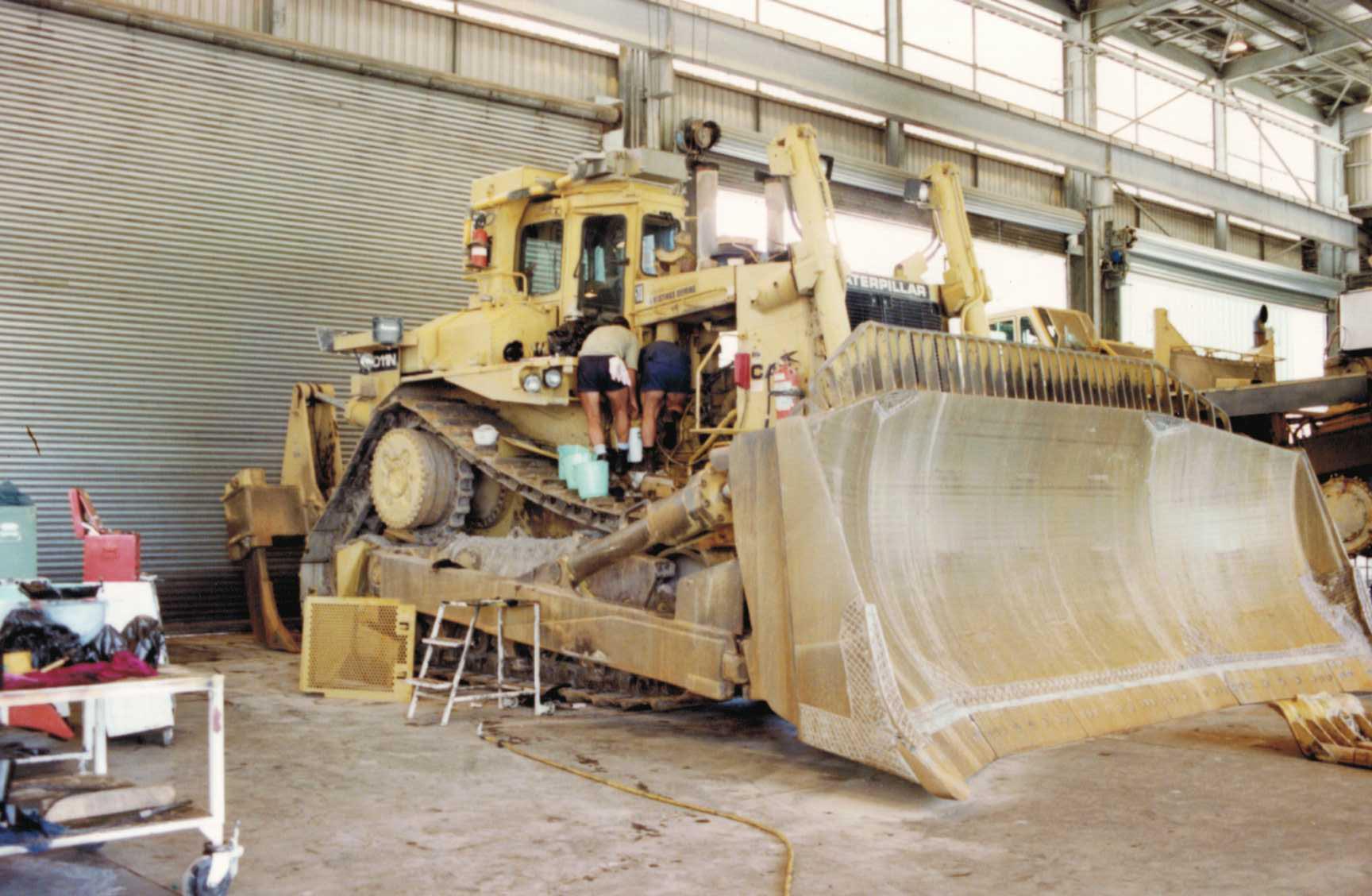
Cost savings boost coal production
According to the laws of physics, power is the rate of performing work. Applied to a diesel-powered coal mining fleet, an increase in power results in an increase in production. A production drive is more complicated than that, of course — but more power is one way of lifting production, and it happens in the background, with no additional effort.
Short answer: FTC Decarbonizer is a fuel-borne combustion catalyst that burns diesel faster and more completely, so each litre does more work. For a mining fleet that means higher haul-truck productivity, 5–9% lower fuel cost, cleaner emissions and longer engine life — with no change to how the fleet operates.
A well-established way to increase power — without compromising equipment warranties, durability or service life — is the ferrous-picrate-based fuel-borne combustion catalyst FTC Decarbonizer (also known as FPC). A four-year study on this product, sponsored by a major mining company, was recently completed at the University of Western Australia. It confirmed more power per unit of fuel, as well as cleaner exhaust emissions from diesel engines.
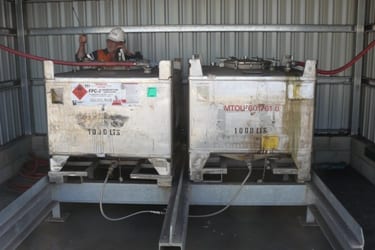 |
One of these tanks will treat 10 million litres of diesel, and save 10 or more B-Double loads of fuel. |
One Queensland thermal coal mine using the FTC/FPC combustion catalyst analysed their operating records after the first 12 months. While their main interest was cutting fuel costs, the records showed an increase in truck haulage rates from 430.8 to 452.7 tonnes per truck-hour operated — a 5.1% increase in material shifted, created with no additional effort at all. Tonnes shifted per litre of diesel also increased by 8.3%.
|
+5.1% more material shifted per truck-hour |
+8.3% more tonnes shifted per litre of diesel |
5–9% lower direct energy cost |
Increased Coal Production
These figures demand further comment, because alongside the productivity gains there are strong “bottom line” economies: direct energy cost reductions (5–9%), reductions in carbon footprint per unit of production, and extended engine service life (24% or more). So how is this achieved?
The FTC/FPC combustion catalyst burns fuel at a faster, more efficient rate (more closely approximating ideal combustion). More of the fuel’s energy is released closer to piston top-dead-centre, with less wasteful tail-end burning in the exhaust. As a result, the faster burn increases developed power per unit of fuel consumed. At any specified power requirement, less fuel is needed; at maximum fuel delivery, peak power and torque are increased — enabling more work to be done, with reduced stress.
For haul trucks, that means faster haul times and more cycles per month. Once governed speed is reached, less fuel is required. Diesel loaders, excavators and shovels always work at full power and contribute strongly to truck productivity by reducing truck queuing: the increased power gives greater breakout forces, faster response and faster loading cycles. That improves truck utilisation, as idle time in queues is reduced.
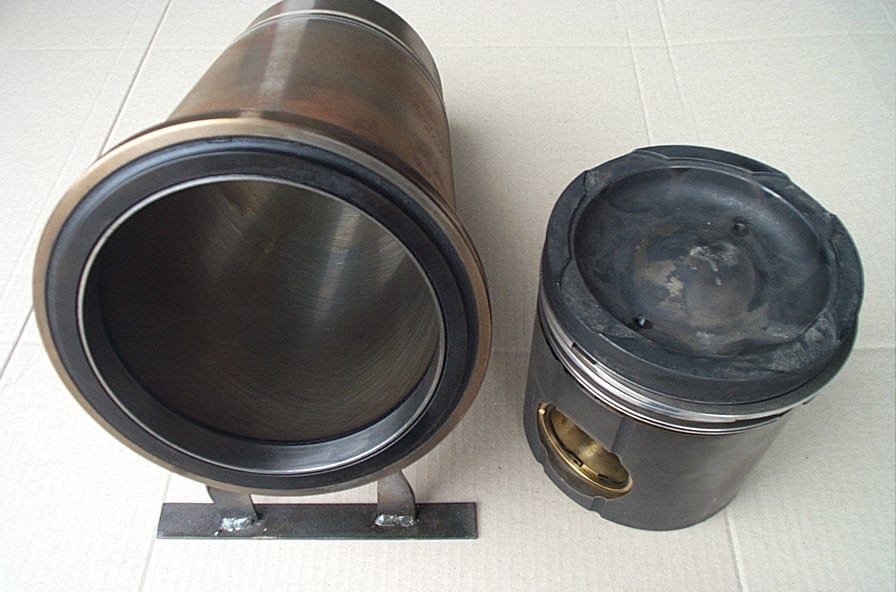
So little wear that the pistons and liners could all be reused at over 23,000 hours on FTC/FPC use.
Equally important to production is equipment availability. FTC/FPC-enhanced combustion also oxidises carbon deposits from combustion and exhaust spaces. Hard carbon build-up is a major cause of engine wear and increased stresses, and can cause catastrophic failures and unplanned downtime. The improved fuel burn also lowers oil soot levels, reducing abrasive engine wear. FTC/FPC use means longer intervals between rebuilds and fewer carbon-related failures of valves, turbochargers and injectors — all without additional planning inputs.
Energy savings are significant thanks to the more efficient combustion. In the example above, 8.3% higher tonnage was handled per litre of diesel. It’s what every mining operation seeks: higher production efficiency and lower cost per unit of production.
FTC/FPC is likely the lowest-cost combustion catalyst on the global industrial market, delivering returns on investment of 600–1200% in fuel savings alone.
Environmental effects are positive too, with reductions in CO², CO, hydrocarbons and diesel particulate emissions (DPE) — importantly, both the mass and the number of particulates are reduced substantially. Competitive products contain hundreds (if not thousands) of times the active material FTC/FPC requires, and can increase the total number of particles — especially the more health-damaging ultra-fines — even where they reduce the overall mass of DPE.
For related reading, see how FTC Decarbonizer works, how black diesel smoke causes engine wear, and our approved fuel-efficiency testing.
To discuss FTC Decarbonizer for your mining or fleet operation, give the team at Cost Effective Maintenance a call on 07 3376 6188.
Recommended Products to Boost Production
-
 Diesel Fuel Additives, Fuel Additives, Main-products, Our Products, Value Packs
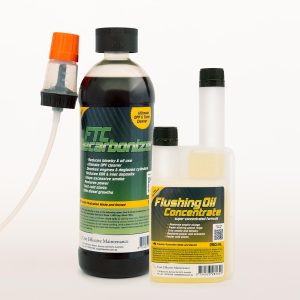
Dirty Diesel Kit
Original price was: $194.00.$170.00Current price is: $170.00. incl. GST -
 Engine Blowby, Value Packs
Engine Blowby Kit
From Original price was: $262.95.$240.00Current price is: $240.00. incl. GSTSelect options This product has multiple variants. The options may be chosen on the product page -
 Bulk Fuel Treatments, Diesel DPF Cleaner, Diesel Fuel Additives, Engine Blowby, FTC Decarbonizer, Fuel Additives, Fuel Biocide, Main-products, Marine Fuel Additives, Our Products, Promotion - Fuel Additives
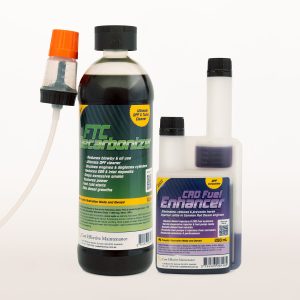
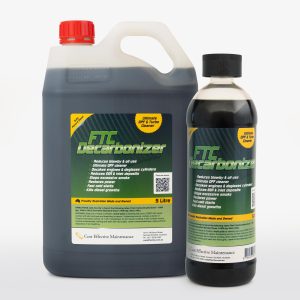
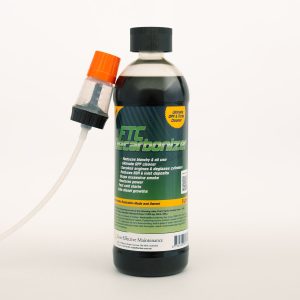
FTC Diesel Decarbonizer
From $135.00 incl. GSTSelect options This product has multiple variants. The options may be chosen on the product page