How does FTC Decarbonizer work?
What is FTC Decarbonizer? FTC Decarbonizer is a combustion enhancer that readily disperses through fuel to play a catalytic role during the combustion process.
- As scientifically accepted, some elements act as catalysts and help promote combustion. FTC Decarbonizer contains Ferrous Picrate, which produces Fe++ ions — proven to be one of the most effective for combustion.
- FTC Decarbonizer is a true ‘combustion catalyst’ in liquid form.
- Treatment ratio from 1:1600 to 1:10,000.
- No change to fuel specifications, ensuring acceptance by OEMs.
What does FTC Decarbonizer do?
FTC Decarbonizer is proven to cut your fuel costs and carbon emissions while reducing maintenance costs:
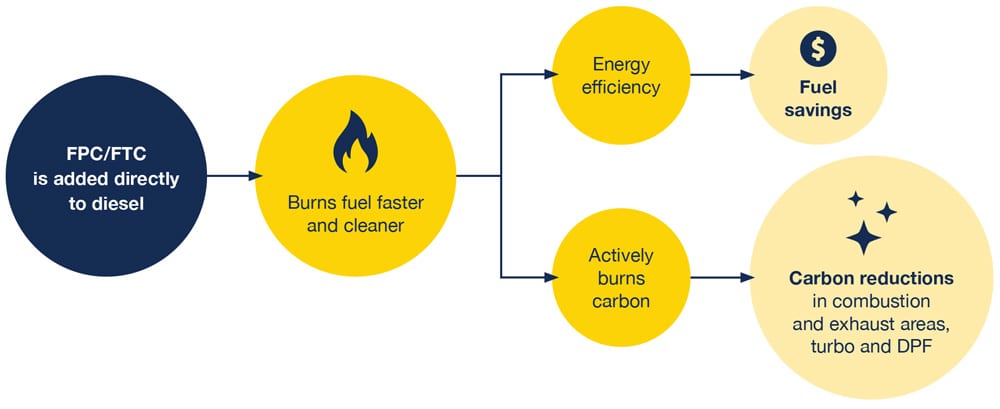
- Reduces fuel consumption and carbon emissions
- Eliminates hard carbon from combustion and exhaust spaces, avoiding turbocharger and DPF failures
- Cleaner, longer-lasting oil — assists extended oil drain intervals and lowers wear metals
- Reduces exhaust smoke (DPM)
- Full biocide — kills the diesel bug
*Government-approved test results available on request (DT80 Test)
Why introduce FTC Decarbonizer to your fleet?
FTC Decarbonizer produces a more complete combustion, which provides significant maintenance savings, such as:
- Avoiding DPF, EGR and turbo failures
- Reduced blow-by and oil consumption
- Avoiding fuel storage tank contamination
- Elimination of cylinder glazing
- Reduced oil contamination, soot, wear metals, etc.
- Reduced harmful emissions
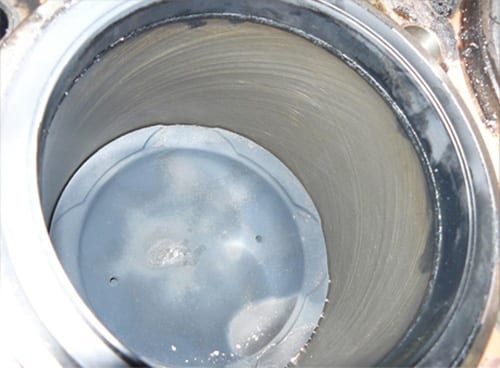
MTU @ 23,000 hrs. Whole-life FTC treated. Scheduled pull-down. No faults to act on. Pistons and liners reused.
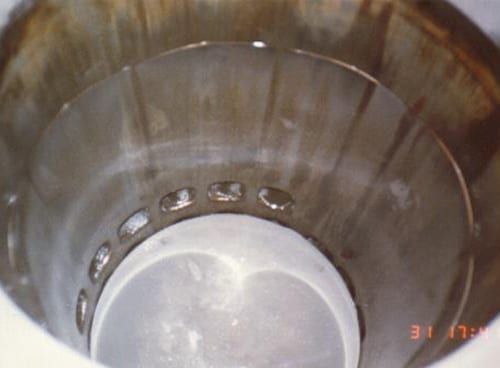
Detroit 149 @ 12,000 hrs treated fuel. Note the extremely clean ports.
How does FTC Decarbonizer actually work?
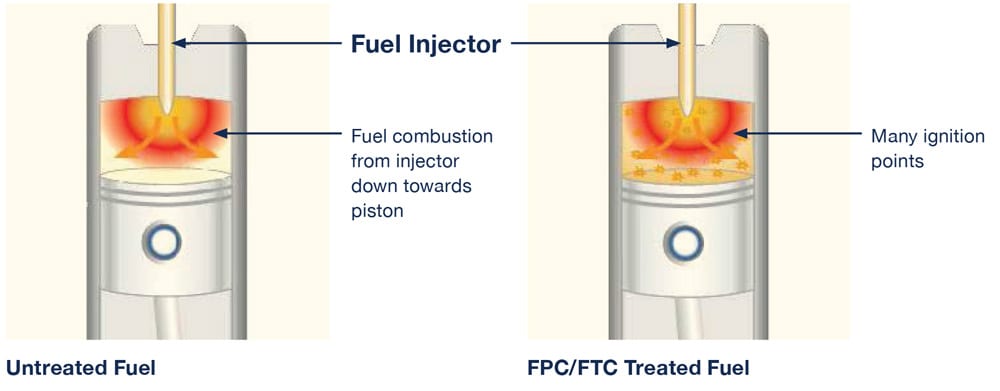
Pre-combustion phase: FTC Decarbonizer treated fuel delivers a cleaner fuel burn by propagating sites throughout the air/fuel mixture, initiating multiple flame fronts, as illustrated:
Combustion phase: FTC Decarbonizer actively burns away all carbon from the combustion area and deglazes cylinders. It removes carbon from pistons, exhaust valves, turbos and diesel particulate filters.
Soot Emission Comparison
Visually, the soot reduction can be seen in the Transmission Electron Microscopy (TEM) analysis of soot samples presented below:
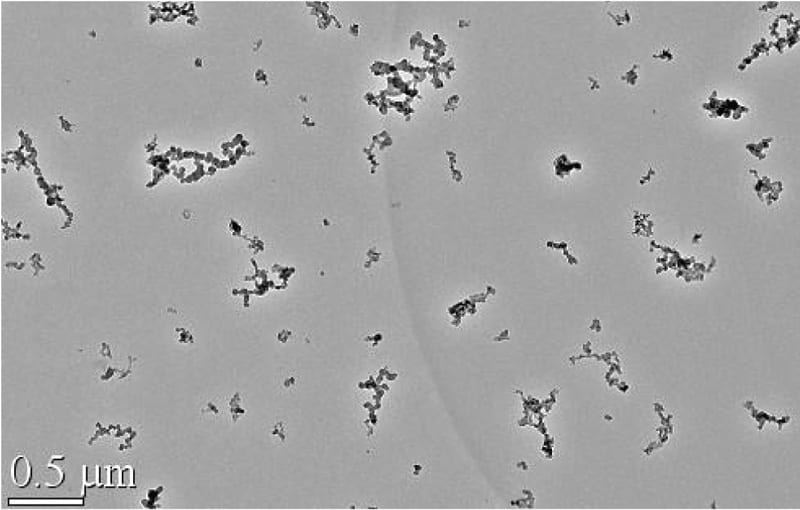
Exhaust sample from an engine not using FTC Decarbonizer: visible engine emissions.
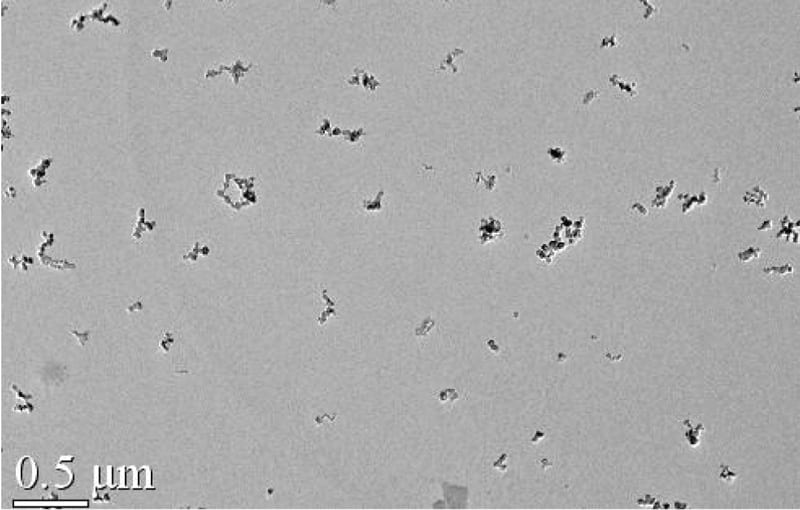
FTC Decarbonizer treated, 1:10,000 ratio: a visible reduction in diesel smoke was recorded. FTC treatment resulted in a reduction in both the number and size of soot particles.
Typical Fuel Efficiencies Provided by FTC Treatment of Fuel
Efficiency improvements vary with engine condition and application:
- New or reconditioned engines, variable loads: 3%–5%
- New or reconditioned engines, full load: 2%–3%
- Used engines, variable loads: 3%–8%
- Used engines, full load: 3%–5%
Sample Field Testing Efficiency — Mobile Equipment
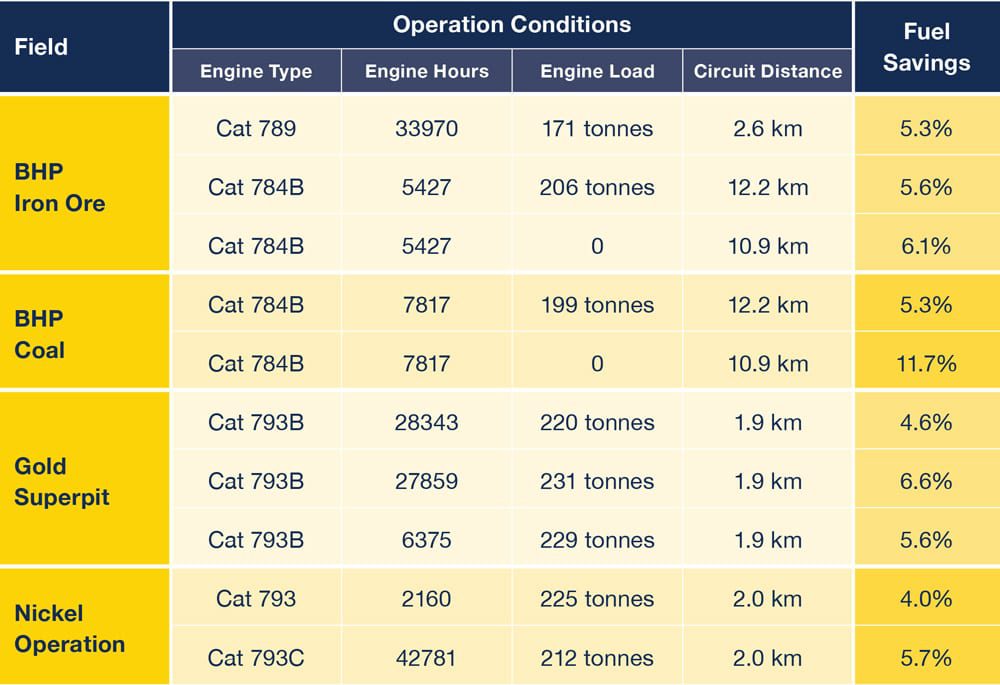
Summary of What Your Operation Can Expect
- Fuel savings of up to 8%
- Reduced diesel particulate matter (smoke) up to 39%
- Reduced maintenance caused by carbon fouling (e.g. eliminate DPF, EGR and turbo failures)
- Reduced oil consumption
- Increased performance
- Effective biocide — kills bacteria and fungus growth in fuel
FTC Decarbonizer has been independently tested. Click here to view the results.
-
 Engine Blowby, Value Packs
Engine Blowby Kit
From Original price was: $262.95.$240.00Current price is: $240.00. incl. GSTSelect options This product has multiple variants. The options may be chosen on the product page -
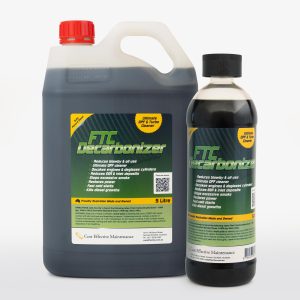
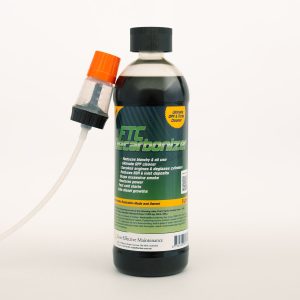 Bulk Fuel Treatments, Diesel DPF Cleaner, Diesel Fuel Additives, Engine Blowby, FTC Decarbonizer, Fuel Additives, Fuel Biocide, Main-products, Marine Fuel Additives, Our Products, Promotion - Fuel Additives
FTC Diesel Decarbonizer
From $135.00 incl. GSTSelect options This product has multiple variants. The options may be chosen on the product page -
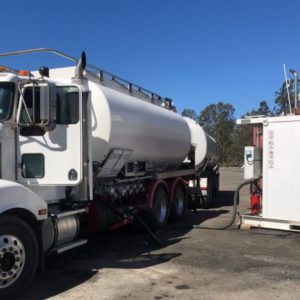 Bulk Fuel Treatments, Main-products, Promotion - Fuel Additives
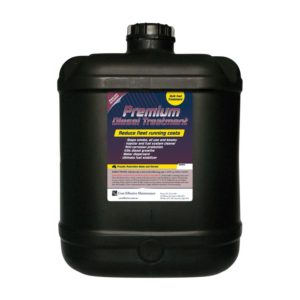
Premium Diesel Treatment
From $1,099.00 incl. GSTSelect options This product has multiple variants. The options may be chosen on the product page