Diesel Smoke Colours Tells YOU a Story…
Diesel smoke colours are one of the clearest warning signs that a diesel engine is not operating as it should. Whether it’s black smoke, blue smoke, or white smoke, each type of diesel exhaust smoke points to issues within the combustion chamber, fuel system, or overall engine components.
Diesel smoke (such as blowby and oil use) is a worrying engine symptom that indicates the engine is not running well and its service life is likely to be shortened considerably unless remedial action is taken.
Basically, smoke from a diesel engine indicates that something is not right. It often reflects incomplete combustion, poor fuel delivery, or worn engine components. All of which can prevent your engine running smoothly, affect fuel efficiency and increase air pollution.
At the very least, smoke from your diesel may be due to a simple issue, such as a clogged air filter, poor air intake, or a cold engine with low engine temperature. At the other end of the scale, it may indicate serious problems such as burning oil, coolant leaks, or even a blown head gasket or a cracked cylinder head.
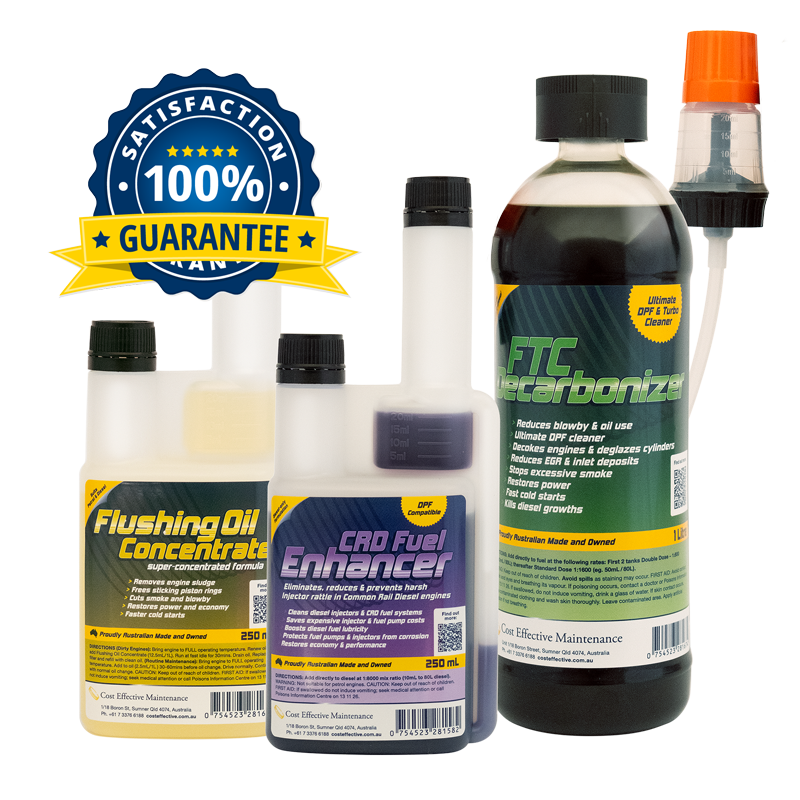
This pack will stop your diesel blowing smoke or your money back!
Simply add to your fuel and oil and the problem is solved.
Should my engine be blowing white, blue or black smoke?
A healthy diesel engine’s exhaust should produce little to no visible smoke under normal conditions. That said, a short puff of smoke when an engine is accelerated under load may be acceptable. Mainly due to the lag in turbocharger speed and airflow, which cannot match the volume of diesel injected into the cylinders.
However, that would only apply to older technology diesel engines. Modern engines are designed to maintain a clean combustion process that delivers optimal engine efficiency and reduced emissions.
There are three main diesel smoke colours:
- Black smoke
- Blue or grey smoke
- White exhaust smoke
Each type of exhaust smoke tells a different story about what’s happening inside the fuel system, combustion chamber, and exhaust system.
Black Smoke from Diesel Engines
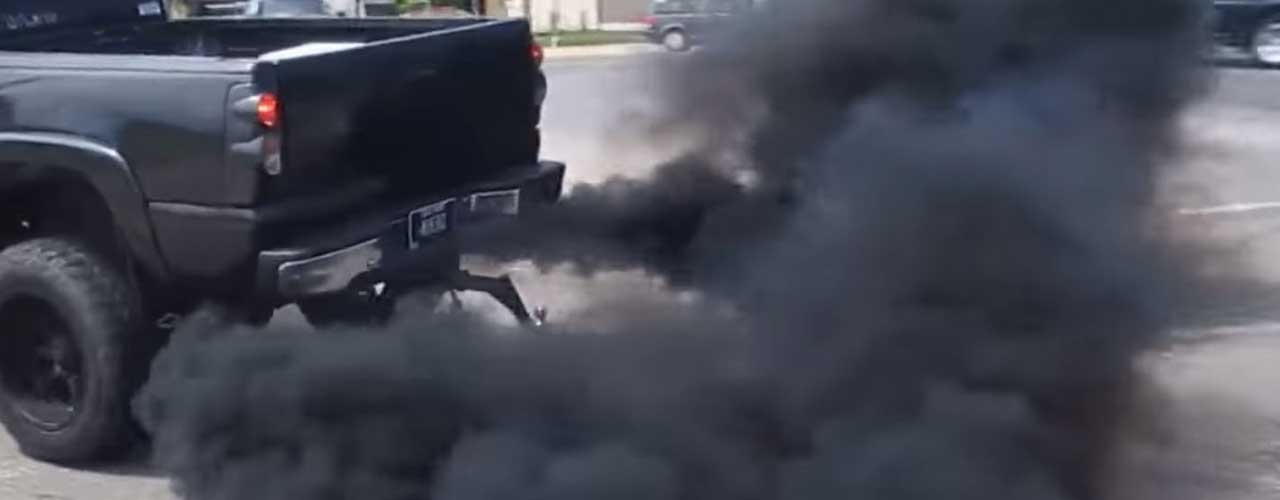
Black smoke is the most common form of diesel exhaust issues. Typically, it is caused by too much fuel being injected into the combustion chamber. This leads to incomplete combustion and unburned fuel:
- Incorrect timing
- Dirty or clogged injectors
- Faulty injectors sticking open too long (Common Rail Diesel type)
- Incorrect fuel flow
- Over-fuelling and poor fuel delivery
- Faulty turbocharger (i.e., not enough air to match the fuel)
- Restricted air intake or clogged air filter
- Incorrect valve clearance and air-fuel mixture
- Low cylinder compression from piston rings, cylinder liners, or other engine components
- Carbon build-up in the intake manifold or intake valves
- Poor or contaminated fuel
- Low engine temperature
- Restricted induction system (e.g., system too small or kinked inlet piping)
- Other engine tune factors
- Poor quality fuel
When an engine is blowing black smoke, it is essentially wasting fuel. This leads to reduced fuel efficiency, increased fuel consumption, and higher carbon dioxide output. Additionally, if this type of excessive smoke persists, it becomes a key contributor to air pollution. If ignored, it can lead to serious engine wear and long-term damage.
Obviously, worn or damaged components must be replaced, and the earlier you identify and fix the problem, the less damage will be done. Keep on top of engine tune issues, including valve adjustments, and regular servicing of the air filter, fuel injectors, and oil filters. Also, use high-quality diesel fuel to help maintain smooth engine operation and reduce emissions.
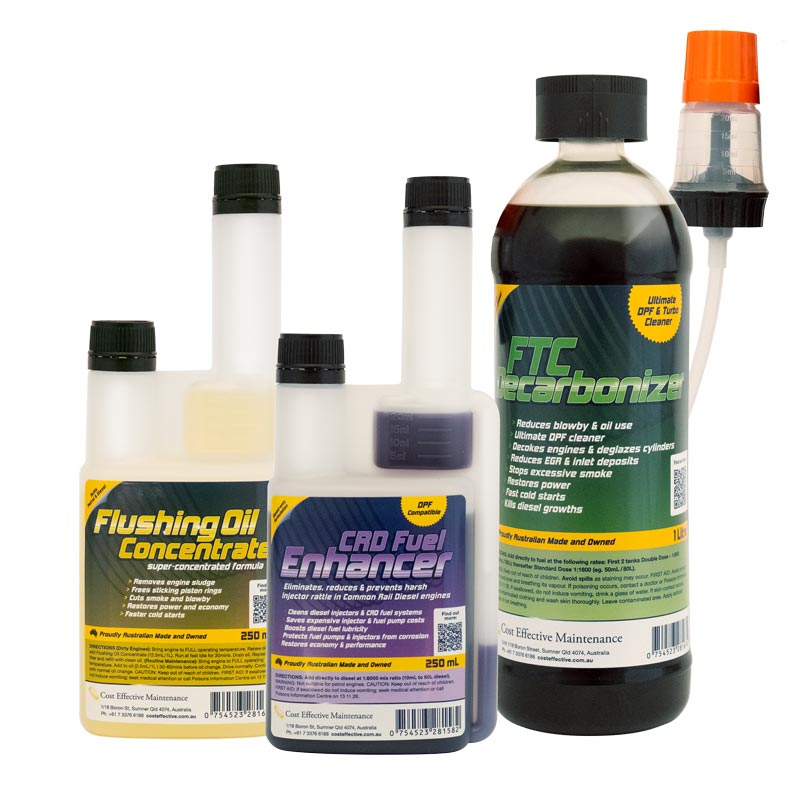
Dirty components, such as injectors, can be easily restored to full cleanliness by using an effective and reliable fuel system cleaner. If you choose from our range of products, Cleanpower is what you need.
Common rail diesels are the new hi-tech breed of diesel to meet ever increasing emission standards. Operating pressures and temperatures are several times higher than older technology, and tolerances are much finer, making them more susceptible to fuel and deposit issues. Injectors and pumps are naturally more expensive, but problems can, and do, melt pistons and destroy engines. CRD Fuel Enhancer is fast becoming the standard for correcting and prevention in Australia.
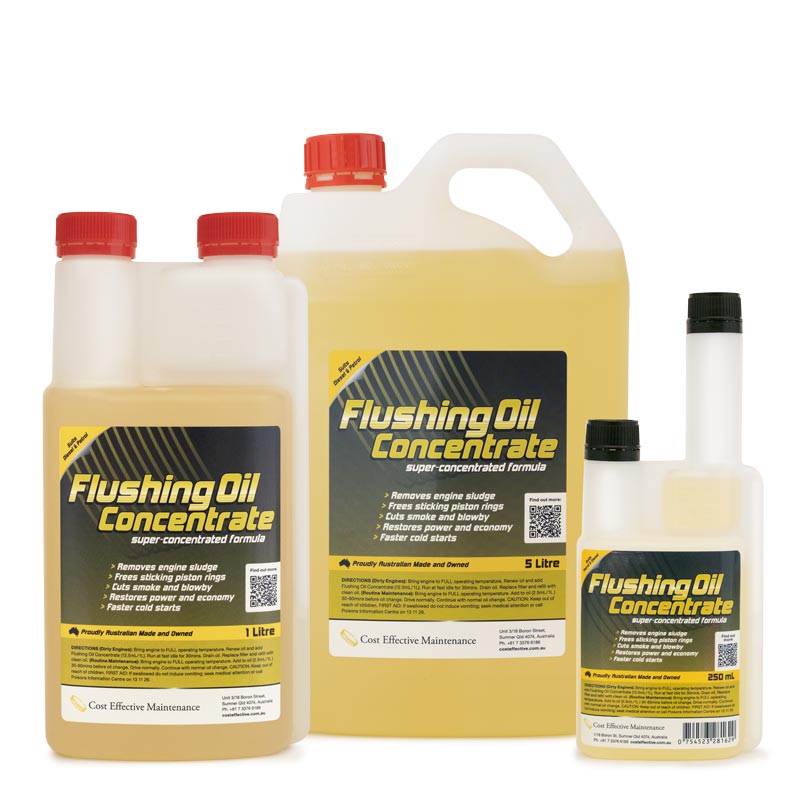
Cleaning of internals of engines has usually only been possible at overhaul, however, Cost Effective Maintenance provide two products to enable vehicle and equipment owners to quickly, safely and cheaply restore full cleanliness to combustion and exhaust spaces (FTC Decarbonizer) as well as piston rings, oil pumps, oil galleries, oil coolers, piston skirts, valve gear, etc (Flushing Oil Concentrate).
Black smoke is high in carbon or soot, which is an undesirable product of diesel combustion. Now, the combustion of diesel is a complicated process of breaking down the various hydrocarbon fuel molecules into progressively smaller and smaller molecules, by burning in the presence of oxygen. The main and ideal end products of combustion are CO2 and H2O (carbon dioxide, the greenhouse gas and water). It is believed that the last step in the process is carbon monoxide (the poisonous gas) to carbon dioxide. This is also the slowest step by far, and when combustion conditions deteriorate some upstream bottle necking occurs in the chain of combustion reactions. This results (according to some authorities) in polymerization of smaller partly burnt molecules into much larger ones, which become visible as soot, or black smoke.
What does it mean if my engine is blowing blue smoke?
Blue smoke (or grey smoke) indicates oil burning inside the engine. This occurs when engine oil enters the combustion chamber, often for several reasons.
- Worn piston rings, valve guides or seals
- Wear in power assemblies (i.e. cylinders, piston rings, ring grooves)
- Cylinder glaze
- Sticking piston rings
- Faulty turbocharger seals
- Incorrect grade of oil (e.g., oil too thin, and migrating past the rings)
- Fuel dilution in the oil (oil thinned out with diesel)
At cold start, blue smoke is often evident, and can reflect reduced oil control, due to fouling deposits around piston rings or cylinder glaze (which is actually carbon deposited in the machined cylinder crosshatching. These tiny grooves actually hold a film of oil, which in turn completes the seal between the combustion chamber and the oil wetted crankcase).
Blue smoke should not be evident at any time, but it is worth noting, that engines with good sound compression can actually burn quite a lot of oil without evidence of blue smoke. Good compression allows oil to burn cleanly, as part of the fuel. It is not good though!
Once again, restore physical cleanliness to all components. Replace worn parts where necessary. In some situations, where the engines are pretty worn, but you just need to keep them in service, cleaning with the previously mentioned products, followed by effective additional anti-wear protection, will reduce internal stresses on all those tired components, providing extended service life. Our AW10 Antiwear achieves this for many of our customers.
Diesel Engines Blowing White Smoke from Exhaust
Your engine producing white smoke, or white exhaust smoke, typically occurs when raw diesel passes through the exhaust completely intact and unburned. Some causes of this include:
- Faulty or damaged injectors
- Incorrect injection timing (could be a worn timing gear or damaged crankshaft keyway)
- Low cylinder compression
White smoke pouring from your engine occurs during a cold start and then disappears as the engine warms up. The most common causes are fouling deposits around piston rings and/or cylinder glazing. Use of our Flushing Oil Concentrate and FTC Decarbonizer addresses these respective problems.
Water entering combustion spaces will also create white smoke. Faulty head gaskets and cracked cylinder heads or blocks are common causes of water entry and are often to blame. Unfortunately, expensive mechanical repair is the only proper solution here.
What is Blowby Smoke?
BLOWBY (or blowby smoke) is the emission of crankcase pressure out the crankcase ventilation system and is generally regarded as a clear indication of an urgently needed engine rebuild.
- Sticking piston rings
- Worn cylinders
- Worn or broken piston rings
- Cracked pistons
In practice, only about 20% or less of diesel engines suffering excessive blowby are caused by worn or damaged parts. Over 80% are attributable to piston ring deposits that cause the rings to bind in their grooves.
Cost Effective Maintenance has demonstrated that excessive blowby in these units can be minimized at low cost and without downtime.
For more information on how to stop diesel smoke give the team a call on +61 7 3376 6188